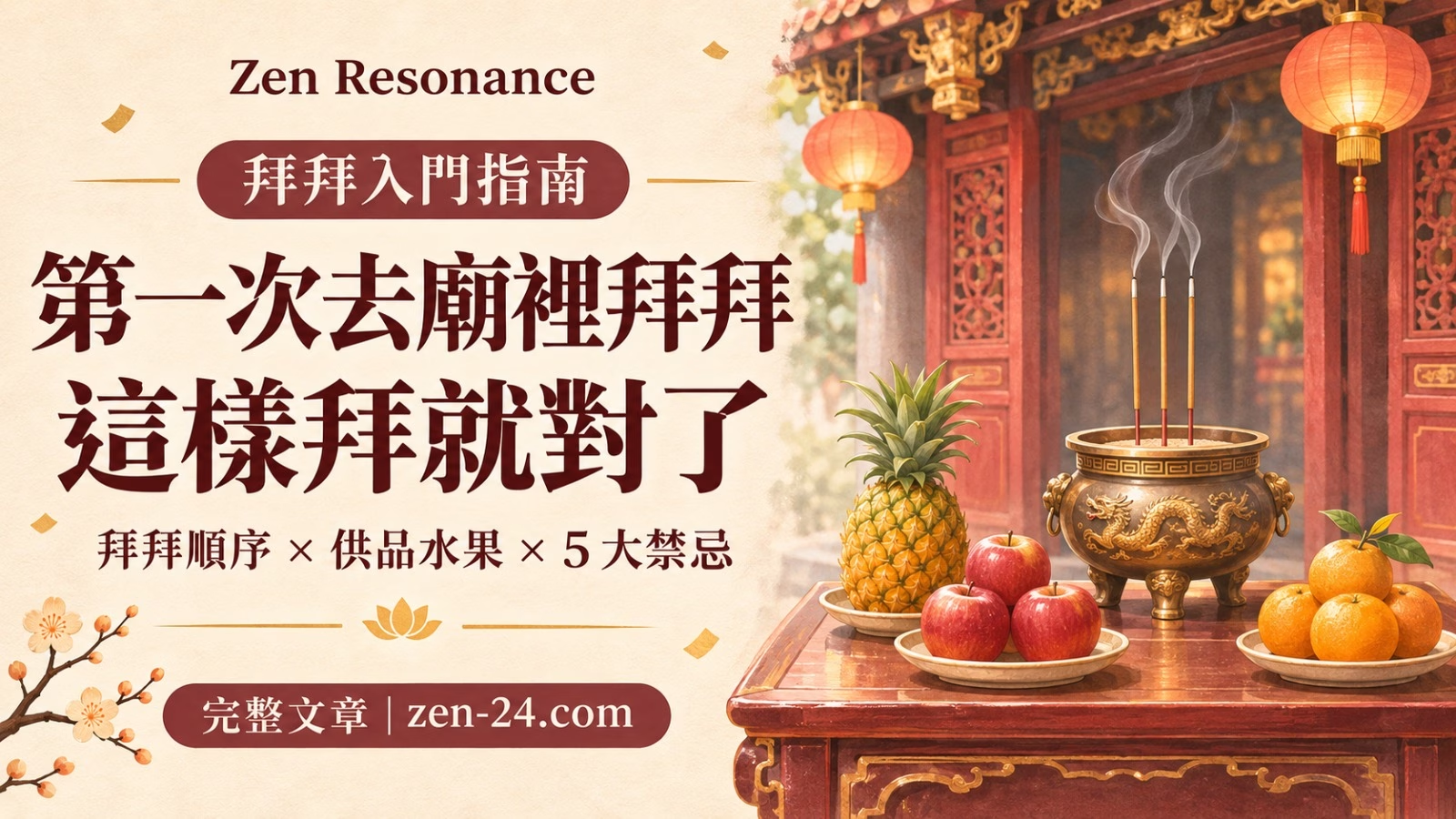
A plain-language guide to temple worship order and taboos: how to hold incense, choose offerings and fruit, cast divination blocks, and what to avoid on your first visit.
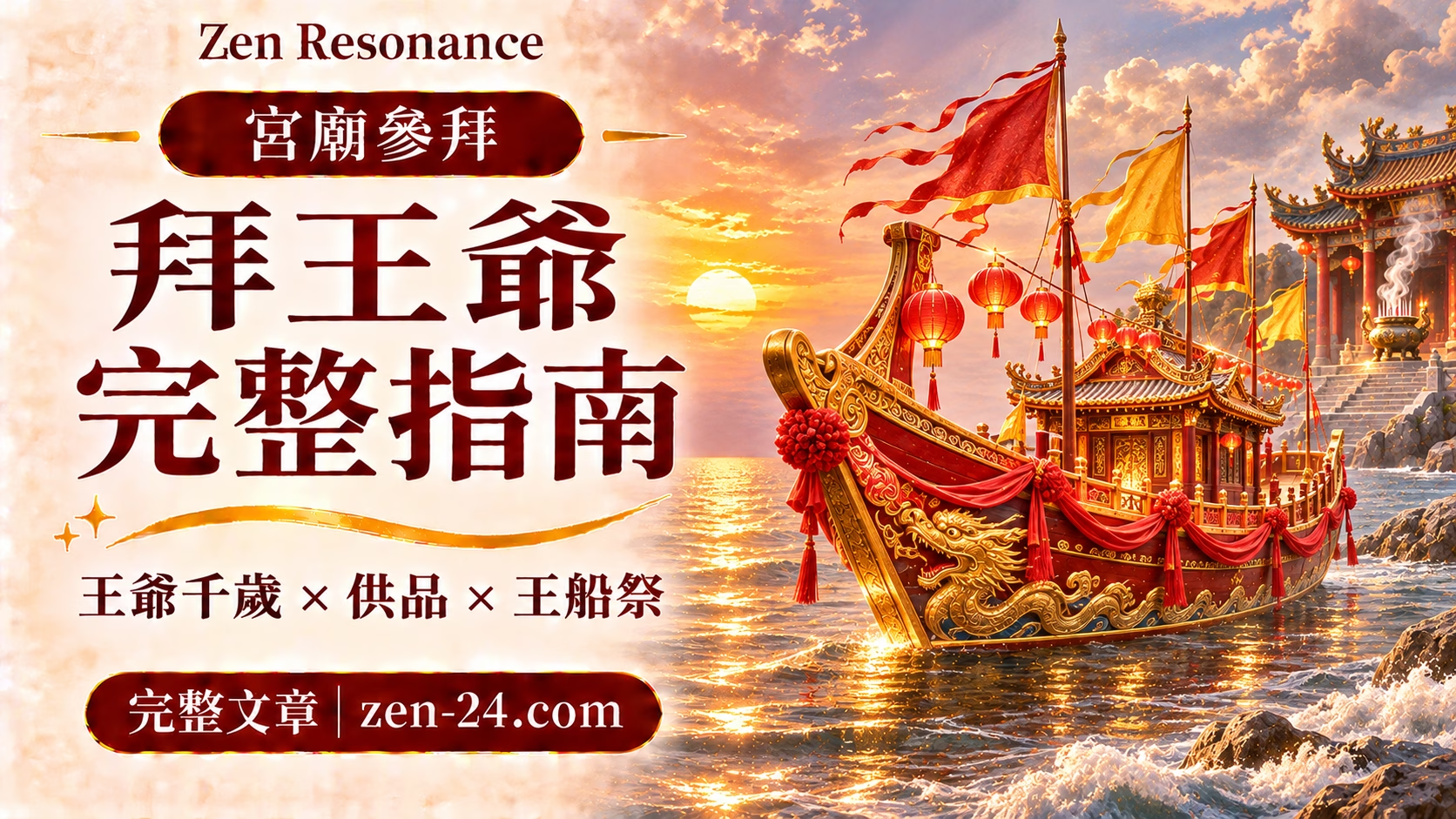
Worshipping the Wangye: Guide to the Boat Burning Festival, Offerings and Prayers for Safety
When traveling in Tainan, Pingtung or Kaohsiung, you often see “Daitian Fu” or “Wangye temples.” Worshipping Wangye is a very important faith in southern Taiwan, and the Wangye (the “Lord Princes”) are seen as deities who patrol on heaven’s behalf and protect their communities. This guide covers their origins, offerings, worship steps and the Boat Burning Festival, so your first visit goes smoothly.
1. Before You Worship: Getting to Know the Wangye
Wangye are also called Qiansui Ye and form a very large group of deities in Taiwanese folk belief. Common ones include the Lords Chi, Li, Wu, Zhu and Fan, known together as the “Five Lord Princes.”
Wangye temples are often called “Daitian Fu,” meaning the Wangye act on the Jade Emperor’s orders to patrol the human world on heaven’s behalf, judging good and evil, driving away plague and protecting people.
In early Taiwan medicine was limited, and during plagues people prayed to the Wangye for safety, so the faith flourished especially in coastal areas. Famous temples include Nankunshen Daitian Fu in Tainan and Donglong Temple in Donggang, Pingtung.
2. When to Worship the Wangye
- Wangye birthdays: each Lord’s birthday differs, for example Lord Chi’s is usually the 18th of the 6th lunar month; follow each temple’s announcements
- 1st and 15th: regular worship days
- When unwell or when family luck is poor: pray for safety and to clear bad energy
- Before long trips or driving: pray for safe travels
- During the Boat Burning Festival: such as Donggang’s Welcoming the Wangye Festival, held every three years
3. Preparing Offerings for the Wangye
- Fresh flowers and fruit: choose fresh, intact seasonal fruit
- Biscuits, pastries and red turtle cakes
- Clear tea or liquor: devotees at some Wangye temples offer liquor
- Joss paper: usually shou jin and gua jin, following the temple’s rules
Many temples now promote reduced incense and joss paper for the environment, so follow the on-site instructions. If you are unsure of the process on a first visit, see the Complete Temple Worship Guide (Chinese) first.
4. How to Worship the Wangye
- Wash your hands before entering the temple and enter from the dragon side (right-hand side)
- Set out the offerings and, following the temple’s route, first pay respects at the Jade Emperor burner
- Then worship the main Wangye, stating your name, birthday and address
- State your prayer clearly, such as family health or safe work
- You may ask by casting divination blocks or drawing a fortune stick; see the Complete Fortune Stick Guide (Chinese)
- Offer incense, wait a moment, then collect the offerings and burn the joss paper
What to Say When Praying to the Wangye for Safety
For example: “An elder in my family has been unwell lately. I humbly ask the Wangye to bless them with a swift recovery and safety.” The more specific the prayer, the clearer your intention.
5. What Is the Boat Burning Festival?
The Boat Burning Festival is the most representative ritual of the Wangye faith. Devotees build an elaborate Wangye boat, and after processions and ceremonies, finally burn the boat to send the Wangye out to sea.
Burning the boat means sending plague and misfortune away with it, praying for peace in the area. Donggang’s Welcoming the Wangye Festival and Xigang’s Liu Xiang pilgrimage are both listed as important folk cultural heritage; for more history, see this introduction to Wangye belief (Chinese).
6. Etiquette and Taboos When Worshipping the Wangye
- Dress modestly and don’t play or shout in the temple
- Don’t touch the sedan chairs, the Wangye boat or ritual implements
- Follow traffic and safety instructions during festivals
- Remember to give thanks when your wish comes true, by returning to the temple or doing good deeds
7. Bring the Protective Energy Home
After worshipping, you can ask for a safety charm (Chinese) to carry with you, or set an image of a solemn temple as your phone wallpaper, an energy anchor you see every day to remind you to stay respectful and travel safely.
Conclusion: Protecting a Community, and Yourself
Worshipping the Wangye is a way to thank the deities who guard the community, and to ask for peace of mind for yourself and your family.
On your next trip south, step into a Daitian Fu and offer incense for your family.
Focus keywords: worship Wangye, Wangye Qiansui, how to worship Wangye, Daitian Fu, Five Lord Princes, Lord Chi, Boat Burning Festival, burning the Wangye boat, Donggang Welcoming the Wangye, Wangye offerings
☕ Support Zen Resonance
If this article brought you a little calm, a little luck, or a new way to invite good fortune, you are welcome to buy me a coffee 🍵
Every bit of support turns into energy for new creations, so more people can receive this blessing. May abundance and good luck flow back to you ✨
Follow Zen Resonance and receive a little good energy every day


Related Posts