How do you worship the Earth God (Tudigong)? A guide to offerings, the 2nd and 16th zuoya, the worship process, praying for wealth and common taboos.
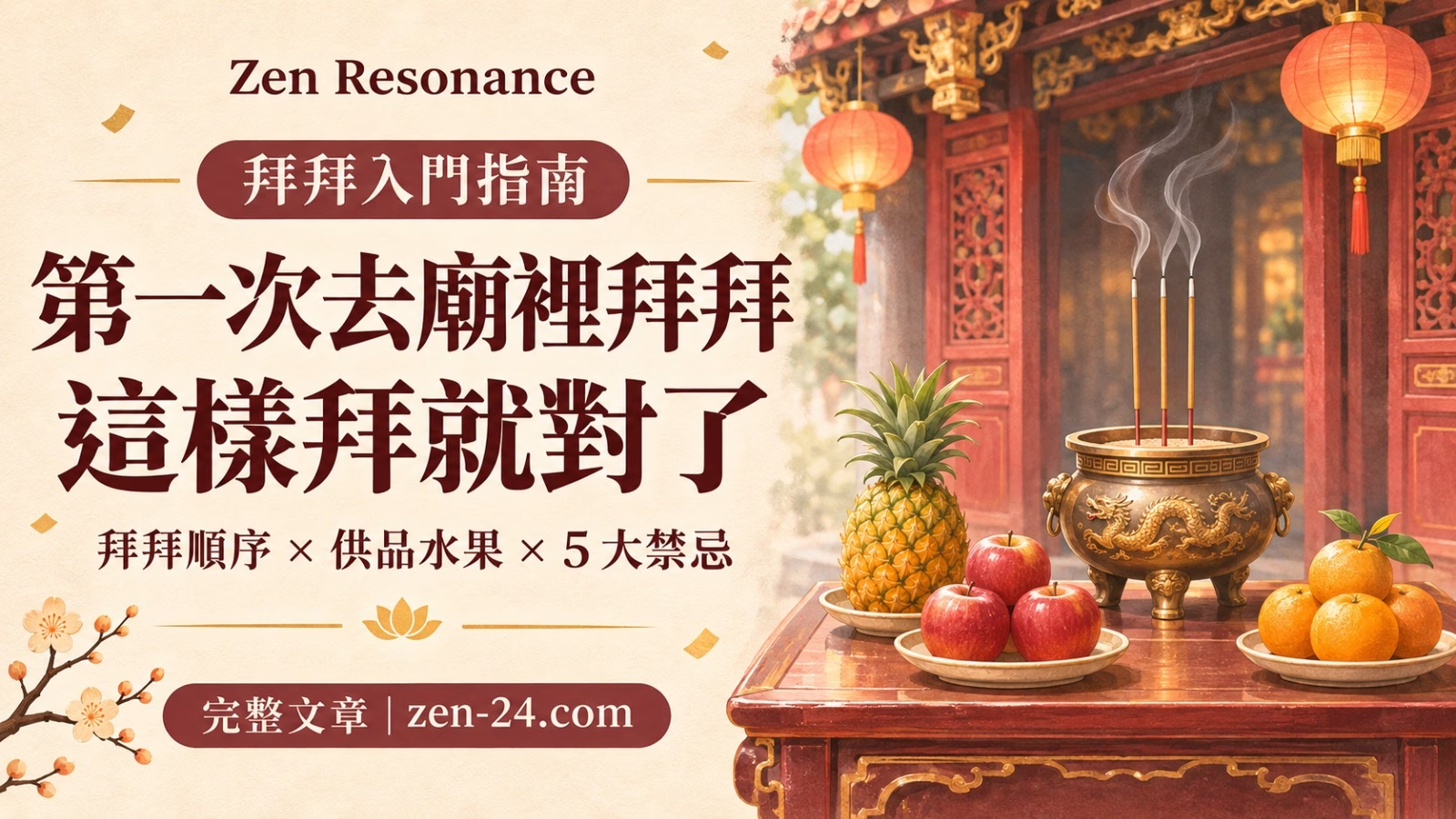
Complete Guide to Worship Order and Taboos: Your First Temple Visit Made Easy (Offerings, Incense and Divination Blocks)
Why does temple worship leave some people feeling at peace, while others stand frozen before the incense burner, afraid of getting the order wrong or breaking a taboo? Worship isn’t that hard. This guide explains in plain language the worship order, how to hold incense, choosing offerings, casting divination blocks and taboos, so even your first temple visit goes smoothly, and each visit becomes an energy ritual for clearing your intentions.
1. The Essence of Worship: A Ritual of “Saying Your Wish Clearly”
From an energy perspective, worship is not a transaction but a focused sorting of your intentions. When you state your name, address and request before the deity, you turn vague anxiety into a clear intention.
Psychology also notes that ritual lowers unease and raises the drive to act. Those few minutes of curling incense smoke and joined palms are a moment of dialogue with yourself. So rather than “worshipping by the book,” sincerity and clear intention matter most.
2. Four Preparations Before Worship
- Check the temple’s information: who the main deity is, the worship order and opening hours; most temples post this on their website or at the entrance.
- Dress neatly: no need to dress up, but avoid anything too revealing or slippers, as a sign of respect for the space.
- Think through what you will say: your name, birth date, address and what you want to pray for or give thanks for, arranged in your mind beforehand.
- A clean body and mind: rest well the night before, and wash your hands and face before leaving so you enter the temple steady.
3. Six Steps of the Worship Order: Calm on Your First Visit
Step 1: Enter by the Dragon Gate, Leave by the Tiger Gate
Facing the temple, the right side is the Dragon Gate (entrance) and the left side is the Tiger Gate (exit). The saying goes “enter the dragon’s throat, exit the tiger’s mouth.” Don’t walk through the central door, because it is the path the deities take.
Step 2: Set Out Offerings, Light Lamps or Add Incense Money
First place the offerings on the altar, and if you have joss paper, place it as the temple directs. If you want to light a prosperity lamp or Tai Sui lamp, or add incense money, it is best to arrange this before worshipping.
Step 3: Take and Light Incense
Many temples post how many sticks go in each burner, so just follow the temple’s rules. After lighting, gently wave out the flame; don’t blow it out with your mouth, which is a courtesy to the deities.
Step 4: Pay Respects to the Jade Emperor First, Then the Main Deity
Usually you go to the temple entrance first and face outward to pay respects to the Jade Emperor, then enter to worship the main deity, then the deities on either side and in the rear hall in turn. Follow each temple’s signs for the exact order.
Step 5: Hold the Incense in Both Hands and Report Clearly
Hold incense with the left hand above and the right below (left is honored), at eyebrow level. Silently say: “Disciple ___, living at ___, comes today to pray for / give thanks for…” The more specific, the more focused your intention.
Step 6: Place the Incense and Wait Until It Burns Halfway Before Collecting Offerings
It is recommended to place incense with the left hand, in each burner in turn. After worshipping, you can sit for a moment, wait until the incense has burned halfway, then collect the offerings and burn the joss paper, and finally leave by the Tiger Gate.
4. How to Choose Offerings
The key points for offerings are fresh, clean and auspicious, and they needn’t be expensive. Common choices:
- Pineapple: in Taiwanese it sounds like “prosperity coming,” a popular offering for career and wealth.
- Apple: symbolizes peace.
- Tangerines and oranges: their names sound like “luck,” meaning great fortune.
- Bananas: in Taiwanese close to “beckon,” often used to attract wealth, though some avoid them when praying for certain matters, depending on personal habit.
- Biscuits and candy: symbolizing a sweet, complete life.
It is generally advised to avoid fruits with many seeds or unusual shapes such as tomato, guava and sugar apple, and odd or auspicious quantities are preferred. Different deities have slightly different preferences; for example, Yue Lao is often offered wedding candy and red dates.
5. Casting Divination Blocks and Drawing Fortune Sticks: Letting the Answer Appear
To cast the blocks, hold them together in both hands, state your question, then gently drop them:
- Sacred block (one flat, one round): the deity agrees; it can be done.
- Laughing block (both flat): the deity smiles without answering, perhaps the question is unclear, so rephrase.
- Negative block (both round): disagreement, or the time is not right.
Before drawing a stick, cast the blocks to ask if you may draw; after drawing, cast again to confirm it is this stick, and only three sacred blocks in a row confirm it. If you can’t understand the verse, ask the temple’s interpreter for help.
6. Worship Taboos: 5 Things Most Often Overlooked
- Don’t walk through the central door or step on the threshold: the threshold symbolizes the deity’s shoulder; just step over it.
- Don’t blow out incense with your mouth: wave out the flame with your hand.
- Don’t make noise in the hall or casually photograph the statues: keep the space’s quiet frequency.
- Don’t make vague or harmful wishes: praying for others to suffer only weighs down your own mind.
- Remember to give thanks when your wish is fulfilled: returning to say thanks, adding incense money or doing good are all ways to complete the energy cycle.
7. Bring the Energy of Worship Home
The calm after worship easily fades in busyness. You can write the wish you made on a small card and put it on your desk, or switch your phone to an energy wallpaper that echoes your wish, as a daily visual anchor.
Each time you unlock your phone, you return once more to the clear, steady intention you held before the deity. Worship is the starting point, and daily action is the road that lands your wish.
Conclusion: Sincerity Is the Best Offering
Order, offerings and taboos are forms that help you focus. What truly gives a prayer power is a sincere and clear heart. Even if you occasionally get a step wrong, the deities care about your intention.
This weekend, pick a temple near home and worship once following these steps. Say your name and your wish, and say thank you. Good luck often begins with being willing to speak.
Focus keywords: worship order, worship taboos, worship offerings, worship fruit, temple worship, how to hold incense, enter by the Dragon Gate and exit by the Tiger Gate, casting divination blocks, drawing fortune sticks, worshipping the Jade Emperor, giving thanks, worship tips
☕ Support Zen Resonance
If this article brought you a little calm, a little luck, or a new way to invite good fortune, you are welcome to buy me a coffee 🍵
Every bit of support turns into energy for new creations, so more people can receive this blessing. May abundance and good luck flow back to you ✨
Follow Zen Resonance and receive a little good energy every day


Related Posts